
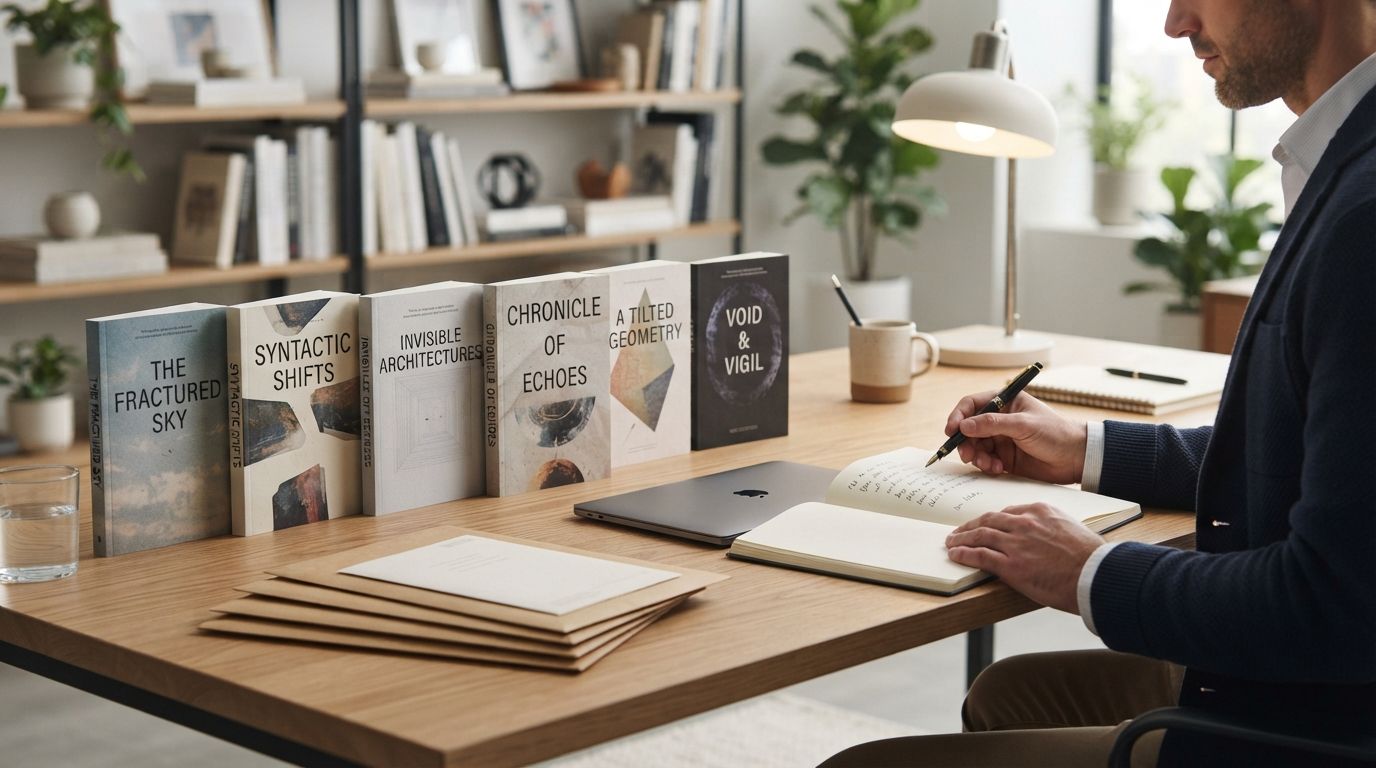
Navigating the Avant-Garde: A Comprehensive Guide to Experimental Fiction Publishers Accepting Submissions
The literary landscape has always been anchored by traditional storytelling—chronological plots, clearly defined character arcs, and conventional syntax. However, there exists a vibrant, radical undercurrent of literature that seeks to disrupt these very foundations. Experimental fiction, also known as avant-garde or innovative literature, challenges the boundaries of what a book can be. Whether through typographical play, non-linear timelines, modular structures, or hybrid genres, experimental writers push the written word into uncharted territory.
For authors crafting these unconventional masterpieces, finding a home for their work can be exceptionally challenging. Major commercial publishing houses often shy away from texts that demand non-trivial effort from the reader. Fortunately, a dedicated network of independent presses, academic publishers, and literary collectives exists specifically to champion these artistic risks. This comprehensive guide explores the landscape of experimental fiction publishers accepting submissions, offering deep insights into their aesthetic preferences, submission processes, and how you can position your manuscript for publication success.
What Defines Experimental Fiction?
Before submitting your work, it is crucial to understand how publishers categorize experimental fiction. True experimentation is not merely “eccentric” writing; it is a systematic interrogation of narrative form, language, and the physical medium of the book itself. Several core methodologies define this genre:
- Structural Innovation: This includes modular novels, choose-your-own-adventure formats for adults, nested narratives, and stories told through unconventional structures such as dictionaries, indexes, or footnotes.
- Linguistic and Syntactic Play: Authors may employ constrained writing techniques (such as the Oulipo movement, where texts are written under strict self-imposed rules, like avoiding a specific letter), stream of consciousness, or asemic writing where the text approaches visual art.
- Visual and Typographical Experimentation: Utilizing varied font sizes, integrating images, utilizing blank space as a narrative device, or printing text in non-traditional directions (often referred to as concrete prose or ergodic literature).
- Hybrid and Cross-Genre Forms: Works that blur the boundaries between prose, poetry, essay, memoir, and critical theory. These texts resist easy categorization and often challenge the reader’s expectations of genre.
Understanding these distinctions is vital because experimental publishers are highly selective. They look for intentionality behind the experimentation. A manuscript must not simply break the rules; it must break them with a profound artistic purpose.
Partnering with Clifford Ghostwriting to Target Experimental Fiction Publishers Accepting Submissions
Navigating the complex submission guidelines of avant-garde and experimental presses requires absolute precision. Because these publishers receive thousands of manuscripts but only publish a select few each year, your submission package must be flawless. This is where professional book publishing services become indispensable.
At Clifford Ghostwriting, we specialize in helping authors refine, format, and position their highly complex literary works for maximum market viability without compromising their artistic integrity. Preparing an experimental manuscript for submission is vastly different from preparing a standard novel. Standard manuscripts follow rigid formatting guidelines (such as Times New Roman, 12pt, double-spaced), whereas an experimental manuscript may rely on specific typographical layouts, margins, or visual elements that must be preserved across digital platforms.
Our team works closely with authors to build comprehensive submission strategies. We assist in crafting compelling query letters that articulate the theoretical and aesthetic frameworks of your work, drafting non-linear synopses that clearly explain the structural mechanics of your narrative, and targeting the precise editors who are actively looking for your sub-genre of innovative prose. By partnering with Clifford Ghostwriting, you gain access to industry expertise that elevates your manuscript from a creative project to a highly polished, professional submission ready for the world’s most prestigious independent presses.
The Role of the Literary Synopsis in Avant-Garde Submissions
One of the greatest hurdles for experimental writers is the synopsis. Traditional publishers ask for a summary of the plot, the main characters, and the resolution. But how do you write a synopsis for a book that has no plot, features recurring disembodied voices instead of characters, or is written as a series of architectural blueprints?
Professional publishing consultants help authors translate abstract literary concepts into industry-standard language. When pitching to experimental fiction publishers accepting submissions, your synopsis must explain the structural logic of the book. It should outline the formal constraints used, the thematic inquiries of the text, and how the physical or visual layout serves the narrative. This demonstrates to acquisitions editors that your work is a deliberate, highly crafted piece of art rather than an accidental collection of disjointed thoughts.
The Landscape of Avant-Garde Publishing: Why Independent Presses Matter
The “Big Five” commercial publishers are beholden to massive profit margins, which makes them inherently risk-averse. They rely on predictable genre formulas and established author brands to guarantee sales. Experimental fiction, by its very nature, resists predictability. Consequently, the preservation and evolution of innovative literature rely almost entirely on independent, non-profit, and university presses.
These independent houses operate under different cultural and financial models. Many are supported by arts grants, university endowments, or passionate communities of subscribers. This financial flexibility allows them to prioritize artistic merit over commercial viability. When you submit your work to an independent experimental press, you are engaging with editors who view publishing as a form of cultural curation rather than a purely commercial transaction.
The Legacy of the Small Press Revolution
The history of modern literature is a history of small, independent presses. Masterpieces like James Joyce’s Ulysses, Virginia Woolf’s experimental novels, and the radical cut-up texts of William S. Burroughs were all championed by small, independent publishers when mainstream houses rejected them as unreadable or unmarketable. Today, contemporary independent presses continue this legacy, serving as the research and development wing of the literary world.
By studying the catalogs of these presses, authors can identify where their work fits within the broader literary conversation. Submitting to these presses is not a compromise; it is an entry into a prestigious, historically significant lineage of literary innovation.
Detailed Directory of Experimental Fiction Publishers Accepting Submissions
Finding the right home for your manuscript requires deep research. Below is a detailed directory of the leading independent and academic publishers that actively seek out and publish experimental, innovative, and cross-genre fiction.
1. Fiction Collective Two (FC2)
FC2 is one of the most historically significant publishers of experimental prose in the United States. Founded in 1974 by a group of writers dissatisfied with the commercial publishing industry’s lack of support for innovative writing, FC2 has remained artistically independent for half a century. Now run as a author-run collective in partnership with the University of Alabama Press, they publish formally challenging, linguistically playful, and politically radical prose.
- Aesthetic Interests: Extreme formal innovation, non-linear narratives, hybrid prose, and works that challenge traditional notions of character and plot.
- Submission Guidelines: FC2 runs two major annual contests: the Ronald Sukenick Innovative Fiction Prize and the Catherine Doctorow Innovative Fiction Prize. They also hold open reading periods for members of their collective and general submissions via Submittable.
- Notable Authors: Stephen Graham Jones, Lidia Yuknavitch, Curtis White, and Jeanne Thornton.
2. Dalkey Archive Press
Originally founded by John O’Brien in 1984, Dalkey Archive Press is legendary in the world of avant-garde literature. Now an imprint of Deep Vellum, Dalkey Archive is dedicated to keeping modernist and postmodernist masterpieces in print, while actively publishing contemporary experimental fiction and literature in translation. Their catalog is a virtual roadmap of 20th and 21st-century literary innovation.
- Aesthetic Interests: Postmodern metafiction, highly intellectual prose, linguistic experimentation, and avant-garde works translated from around the globe.
- Submission Guidelines: Dalkey Archive accepts unsolicited submissions of both English-language originals and translations. Writers must submit a detailed query letter, a complete CV, a synopsis, and a substantial sample of the manuscript.
- Notable Authors: Gilbert Sorrentino, Flann O’Brien, Carole Maso, and Nicholas Mosley.
3. Two Dollar Radio
Two Dollar Radio is a family-run indie press based in Columbus, Ohio. They describe their mission as publishing “work that fights back.” While they publish a range of fiction, they are highly receptive to formally inventive, visceral, and subversive prose that does not fit neatly into commercial genres.
- Aesthetic Interests: High-energy narrative prose, punk aesthetics, social critique, and structural experimentation that remains highly engaging and readable.
- Submission Guidelines: They open periodic, fee-free submission windows throughout the year. They require a query letter, brief synopsis, and the first 30–50 pages of the manuscript.
- Notable Authors: Hanif Abdurraqib, Grace Krilanovich, and Joshua Mohr.
4. Coffee House Press
Based in Minneapolis, Coffee House Press is a highly prestigious non-profit literary publisher. They believe that a book is not just a commercial product but a medium for community, conversation, and artistic expression. Their catalog frequently features books that challenge form, integrate visual art, or explore hybrid essayistic fiction.
- Aesthetic Interests: Unconventional structures, prose that borders on poetry, multicultural perspectives, and works that explore the intersections of visual art and text.
- Submission Guidelines: Coffee House Press holds brief, highly competitive open submission windows, typically capped at a specific number of submissions. It is essential to monitor their website and submit early on the day the window opens.
- Notable Authors: Valeria Luiselli, Hernan Diaz, and Ben Lerner.
5. Tarpaulin Sky Press
Founded in 2006, Tarpaulin Sky Press focuses on publishing books that blur, bypass, or cross the boundaries of genre. They are particularly interested in works that combine prose, poetry, image, and performance.
- Aesthetic Interests: Cross-genre and hybrid works, prose poetry, collaged narratives, and texts that utilize visual elements or unique typographical layouts.
- Submission Guidelines: They accept submissions primarily during designated reading periods, which are announced on their website and newsletter. They utilize Submittable for their submission portal.
- Notable Authors: Jenny Boully, Joyelle McSweeney, and Bhanu Kapil.
6. Dorothy, a publishing project
Dorothy is a highly curated feminist press dedicated to publishing books by women (including trans women) and gender-nonconforming writers. They publish two books simultaneously each fall, creating a unique dialogue between the two texts. Their selections are consistently experimental, strange, and deeply artistic.
- Aesthetic Interests: Surrealism, uncanny narratives, formal play, feminist perspectives, and prose that challenges traditional narrative expectations.
- Submission Guidelines: Dorothy opens its submission window annually, usually in the early spring, accepting submissions until they reach their cap. They are highly selective, publishing only two books per year.
- Notable Authors: Nell Zink, Renee Gladman, and Cristina Rivera Garza.
7. Inside the Castle
Inside the Castle is an independent press that approaches book publishing as an architectural and artistic practice. They reject traditional narrative structures completely, focusing instead on books that exist as unique physical objects and texts that push the absolute limits of legibility, form, and conceptualism.
- Aesthetic Interests: Extreme conceptualism, typographical experimentation, massive non-linear texts, computer-generated prose, and books that challenge the very definition of reading.
- Submission Guidelines: They open submissions periodically. Authors are encouraged to look at their highly unique catalog to ensure their work matches the press’s radical aesthetic before submitting.
- Notable Authors: Michael J. Seidlinger, Vi Khi Nao, and Sebastian Castillo.
8. 11:11 Press
11:11 Press is an independent publisher of literature and art based in Minneapolis. They are known for their exquisite physical book designs and their commitment to underground, avant-garde, and highly innovative writing.
- Aesthetic Interests: Transgressive fiction, visual text, hybrid forms, experimental prose, and works that explore digital culture and technology.
- Submission Guidelines: They open submission windows periodically. They require a query letter, author bio, and a full manuscript submission in PDF format to preserve formatting.
- Notable Authors: Mike Corrao, Joanna Ruocco, and David Ohle.
9. Rose Metal Press
Rose Metal Press is a non-profit publisher dedicated to the publication of hybrid genres. This includes flash fiction, prose poetry, flash nonfiction, and novels-in-verse. They are the premier destination for writers working in condensed, highly lyrical, and structurally innovative short forms.
- Aesthetic Interests: Flash fiction sequences, hybrid text-and-image projects, collaborative writing, and prose poetry.
- Submission Guidelines: They run an annual short chapbook contest and host open reading periods for full-length manuscripts during specific times of the year.
- Notable Authors: Kim Chinquee, John Dufresne, and Sierra Nelson.
A Comparative Guide to Experimental Fiction Publishers Accepting Submissions
To help you determine which publisher is the best fit for your unique manuscript, the following table compares key aspects of these leading avant-garde presses:
| Publisher Name | Primary Aesthetic Focus | Preferred Formats / Sub-genres | Submission Method | Submission Windows |
|---|---|---|---|---|
| Fiction Collective Two (FC2) | Formal innovation, radical prose, non-linear narratives | Novels, novella collections, short story collections | Submittable / Annual Contests | Typically late summer to autumn |
| Dalkey Archive Press | Postmodernism, literary translation, intellectual fiction | Novels, hybrid prose, translated works | Email / Postal Mail | Year-round (open submissions) |
| Two Dollar Radio | Visceral prose, subversion of tropes, social critique | Novels, narrative non-fiction | Submittable / Online Portal | Periodic (check website) |
| Coffee House Press | Unconventional structures, poetic prose, diverse voices | Novels, essays, poetry, hybrid forms | Submittable (capped) | Brief periodic windows |
| Tarpaulin Sky Press | Cross-genre, hybrid, visual-text integration | Prose-poetry, collaged text, hybrid books | Submittable | Announced reading periods |
| Dorothy, a publishing project | Surrealism, feminist narratives, uncanny prose | Novels, short story collections, novellas | Submittable (capped) | Annual spring window |
| Inside the Castle | Extreme conceptualism, typographical art, non-legibility | Conceptual prose, non-linear texts, visual books | Submittable / Email | Periodic windows |
| 11:11 Press | Transgressive, underground, visual layouts | Novels, short fiction, poetry, hybrid art | Submittable | Announced reading periods |
| Rose Metal Press | Hybrid genres, condensed prose, text-and-image | Flash fiction, prose poetry, graphic narratives | Submittable / Annual Contest | Annual contest + periodic windows |
How to Prepare an Experimental Manuscript for Submission
Submitting to experimental fiction publishers accepting submissions requires a meticulous approach. Because your work likely deviates from standard literary conventions, your submission package must work harder to demonstrate your professionalism, intent, and craft. Follow these best practices to ensure your manuscript stands out in the slush pile:
1. Master the PDF Format
If your manuscript contains specific typographical layouts, varied font sizes, images, or intentional white space, never submit it as a standard Word document (.docx). Word documents render differently depending on the operating system, software version, and screen size of the reader’s device. This can completely distort your carefully designed layout. Always export your manuscript to a high-quality PDF to ensure that your formatting remains exactly as you intended it to be read.
2. Write an Artist Statement
Many experimental presses ask for an artist statement or a statement of intent in addition to your query letter. This is your opportunity to explain the theory behind your practice. You should address the following questions:
- What literary traditions or artistic movements is your work in conversation with?
- What formal constraints or structural rules did you employ while writing?
- How does the form of the book reinforce its thematic content?
- Why is this specific experimental format necessary to tell this story?
Keep this statement professional, academic, and concise. Avoid sounding pretentious; instead, focus on demonstrating your deep understanding of literary craft.
3. Craft a Non-Linear Synopsis
Even if your book does not follow a traditional plot, editors need to understand how the book functions as a whole. Create a synopsis that outlines the architecture of the book. For example, if your novel is written in alphabetical order, explain how the alphabetical progression shapes the reader’s emotional journey. If your book consists of multiple overlapping narratives, explain how these threads intersect and what thematic resonance is achieved through their juxtaposition.
4. Align Your Work with the Press’s Catalog
The most common reason for immediate rejection is submitting a manuscript to a press that does not publish that specific style of writing. Before submitting, purchase at least two or three books from the publisher’s catalog. Read them carefully. Understand their aesthetic vocabulary. In your query letter, mention these books and explain how your manuscript fits alongside them. This shows editors that you are a genuine supporter of their mission and understand their unique place in the literary ecosystem.
Key Takeaways for Aspiring Experimental Writers
- Intentionality is Key: Experimental writing must be driven by a clear artistic purpose. Breaking rules just for the sake of being different rarely results in a cohesive manuscript.
- Support the Indie Ecosystem: Independent presses survive on the support of the literary community. Buy books, attend virtual readings, and engage with the presses you wish to submit to.
- Perfect Your Submission Package: Ensure your query letter, synopsis, and artist statement clearly articulate the formal, structural, and linguistic mechanics of your work.
- Preserve Your Layout: Always submit visually complex manuscripts as PDFs to prevent formatting distortion during the review process.
- Seek Professional Development: Utilize specialized publishing services to polish your abstract concepts and ensure your submission package meets the highest industry standards.
Frequently Asked Questions (FAQ)
1. What is the difference between literary fiction and experimental fiction?
While literary fiction focuses on character depth, style, and thematic complexity, it generally adheres to traditional narrative structures and prose conventions. Experimental fiction, however, actively questions and deconstructs these conventions. It treats the narrative form, syntax, and even the physical book as variables to be manipulated and reimagined.
2. Do experimental fiction publishers require literary agents?
No, the vast majority of independent and academic experimental publishers do not require authors to have literary agents. They accept unsolicited manuscripts directly from writers during their open reading periods. This makes the avant-garde publishing space highly accessible to emerging and unrepresented authors.
3. Can I submit visual-text or graphic-hybrid manuscripts?
Yes, many experimental publishers, such as Tarpaulin Sky Press, Inside the Castle, and 11:11 Press, are highly interested in hybrid works that combine text with visual elements, drawings, photography, or graphic design. Ensure that your files are properly formatted as PDFs to preserve the exact spatial relationship between the text and the imagery.
4. Do experimental presses pay advances to authors?
Because independent presses operate on smaller budgets than commercial houses, advances are typically modest, ranging from a few hundred to a few thousand dollars. Some very small presses may not offer upfront advances but instead provide higher royalty rates, a generous number of author copies, or a split of net profits. Many of these presses are non-profits that reinvest all revenue back into publishing innovative literature.
5. How long should an experimental fiction manuscript be?
There is no standard length for experimental fiction. Manuscripts can range from ultra-condensed flash collections of 15,000 words to massive, sprawling epic prose works exceeding 100,000 words. Publishers like Rose Metal Press specialize in shorter, hybrid chapbook lengths, while presses like Dalkey Archive or Inside the Castle routinely publish full-length novels. Always check the specific word count guidelines of each individual press before submitting your work.
Expert Summary
The world of experimental literature is a testament to the endless possibilities of the written word. For writers who dare to venture beyond the boundaries of traditional narrative, the journey to publication requires patience, precision, and a deep understanding of the independent publishing ecosystem. By aligning your manuscript with the specific aesthetic missions of dedicated avant-garde presses, mastering the unique formatting requirements of innovative prose, and utilizing professional book publishing services to refine your pitch, you can successfully navigate the landscape of experimental fiction publishers accepting submissions. Your unconventional voice is vital to the ongoing evolution of literature—prepare your work with care, target the right homes, and share your vision with the world.
Disclaimer: Clifford Ghostwriting provides publisher information strictly for educational and informational purposes. We are an independent service provider and are not affiliated with, endorsed by, or partnered with any publishers mentioned on this site. We do not guarantee manuscript submissions, acceptance, or publication outcomes. Our services focus on providing professional writing, editing, and marketing support to help authors prepare and present their work.


