
Introduction
In an era dominated by fleeting digital interactions and mass-produced consumer goods, the demand for highly personalized, meaningful gifts has reached an all-time high. Gift-giving is no longer just a social obligation; it is an opportunity to cultivate deep emotional connections and preserve shared histories. Among the most enduring, impactful, and deeply cherished gifts you can offer is a custom-made book. If you are wondering How To Make A Book For Your Best Friend, you are embarking on a creative journey that transcends conventional gift-giving, transforming shared memories, inside jokes, and life-changing milestones into a physical heirloom.
According to recent industry trends in self-publishing and custom printing, personalized books have seen a significant surge in popularity. Consumers are moving away from generic retail options in favor of bespoke, artisanal products that tell a specific story. Creating a book for a close companion requires careful planning, editorial structuring, aesthetic consideration, and a clear understanding of production methods. Whether your goal is to compile a visually stunning photo book, write a collaborative collection of personal essays, or produce a professionally bound memoir of your friendship, this comprehensive guide provides the step-by-step framework necessary to execute your vision with professional-grade quality.
Step 1: Defining the Concept and Theme
Before putting pen to paper or importing photos into design software, you must establish a clear conceptual foundation. A successful book requires a cohesive theme to prevent it from feeling like a disorganized collection of random thoughts. Consider what defines your relationship with your best friend and choose a format that best reflects that dynamic.
The Memory Book and Scrapbook Hybrid
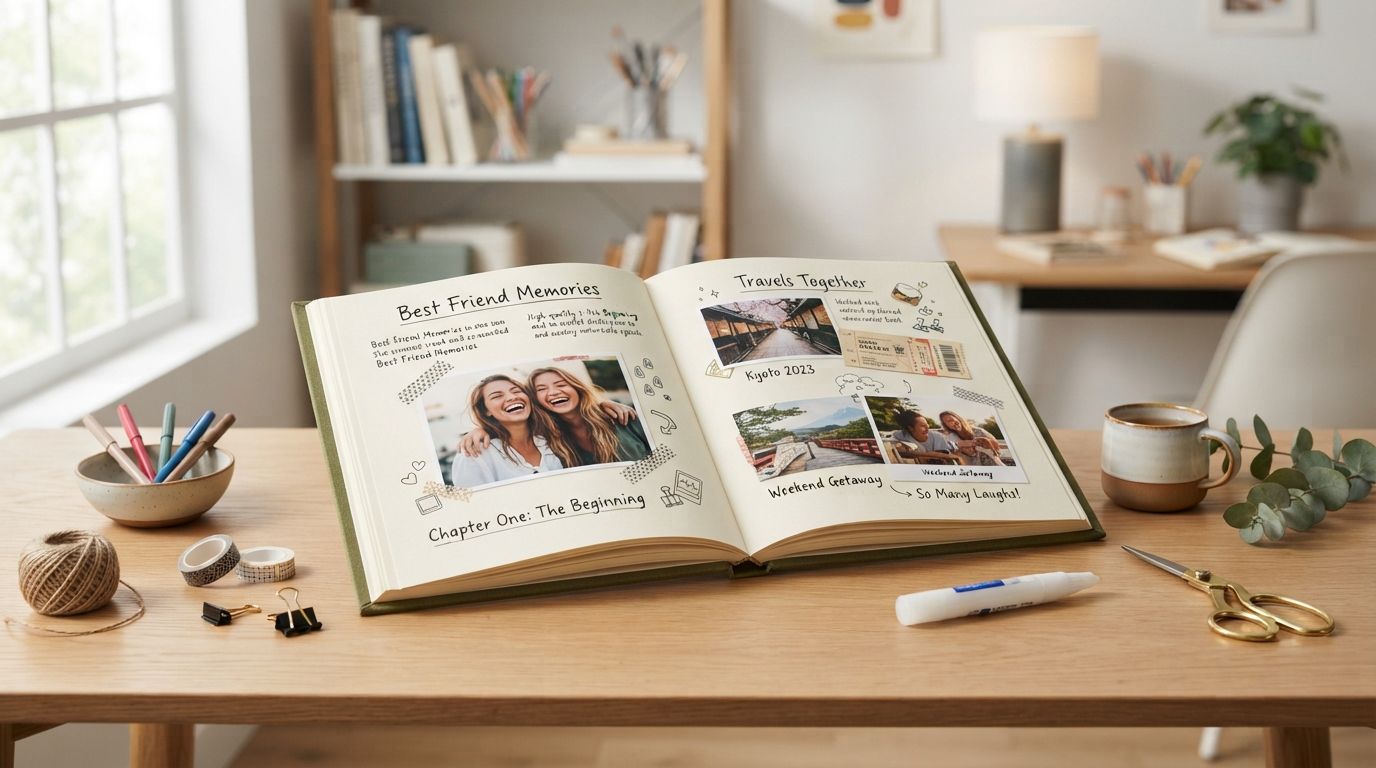
This concept focuses heavily on chronological storytelling, combining visual assets with brief narrative elements. It is ideal for friends who have shared multiple life stages together, such as childhood, college years, and career milestones. The narrative arc follows your journey from the moment you met to the present day, using photographs, ticket stubs, travel itineraries, and scanned handwritten notes to anchor the text.
The Anthology of Inside Jokes and Shared Wisdom
If your friendship is defined by humor, shared adventures, and unique banter, an anthology format is highly effective. This style of book functions as an curated encyclopedia of your relationship. You can structure it alphabetically or categorically, defining specific terms, mapping out legendary road trips, and documenting the funny, absurd, or profound moments that only the two of you understand.
The Structured Biography or Friendship Memoir
For a highly sophisticated and literary approach, you can write a structured biography or memoir focusing on your friend’s life journey and the pivotal role your friendship played within it. This format relies heavily on written prose, detailing major life challenges overcome together, personal achievements, and deep philosophical reflections on companionship. It reads like a traditional novel, offering a profound level of emotional depth.
Step 2: Gathering Content, Memories, and Assets
Once you have selected your theme, the research and compilation phase begins. Gathering high-quality content is the most time-consuming yet rewarding aspect of learning How To Make A Book For Your Best Friend. To build a robust manuscript and layout, you must systematically source both text and visual media.
Sourcing Visual Material
High-resolution imagery is essential for a professional finish. Avoid using low-quality screenshots from social media whenever possible, as these will appear pixelated when printed. Instead, try to locate original digital image files, or use a high-quality flatbed scanner to digitize physical photos at a minimum of 300 DPI (dots per inch). Look beyond standard portraits; include images of meaningful locations, screenshots of memorable text message conversations, and photos of physical keepsakes.
Conducting “Secret” Interviews with Loved Ones
To add unexpected depth and surprise to the book, consider secretly reaching out to your best friend’s family members, mutual friends, or colleagues. Ask them to contribute short stories, letters of appreciation, or unique perspectives on your friend’s character. Integrating these diverse voices transforms the book from a private conversation between two people into a rich, community-driven tribute to your friend’s impact on the world.
Step 3: Structuring and Designing the Book Layout
The visual presentation of your book dictates how the reader interacts with your content. A cluttered, disorganized layout can detract from the emotional weight of your words. Professional book designers rely on structural grids, deliberate typography choices, and consistent margins to create a polished reading experience.
Choosing the Right Software
Your choice of design software should align with your technical skill level and the complexity of your book layout:
- Adobe InDesign: The industry standard for professional book layout design. It offers unparalleled control over typography, grid systems, and page numbering, making it ideal for text-heavy memoirs and complex photo spreads.
- Canva: A highly user-friendly, web-based design platform that offers numerous pre-designed templates. Canva is excellent for beginners who want to create visually appealing scrapbooks or short photo books without a steep learning curve.
- Blurb Bookwright or Shutterfly: Proprietary software provided by printing services. These platforms streamline the process by combining design templates with direct-to-print ordering systems, ensuring your book matches their specific printing specifications.
Visual Layout Principles
When designing your pages, keep these fundamental layout principles in mind to ensure a professional aesthetic:
- The Gutter and Margins: Always leave ample space in the inner margin (the gutter) where the pages bind together. If text or important image elements are too close to the gutter, they will be swallowed by the binding and become unreadable.
- Typographic Hierarchy: Use no more than two or three font families throughout the entire book. Establish a clear hierarchy with large, distinct headers (serif or sans-serif) and a highly legible, clean font for the body text (typically a classic serif font like Garamond or Baskerville for printed books).
- Whitespace: Do not fear empty space. Allowing breathing room around your text and images prevents the pages from feeling overwhelming and directs the reader’s focus to the most critical content.
Step 4: Writing and Editing the Narrative
The heart of any custom book lies in its written prose. Even if your book is highly visual, the accompanying text must be engaging, grammatically correct, and emotionally resonant. Writing about someone close to you requires a balance of vulnerability, clarity, and narrative structure.
Finding Your Narrative Voice
Decide on the tone of your writing early in the process. Will it be conversational, humorous, poetic, or deeply reflective? Be authentic to how you naturally communicate with your friend, but elevate the language to suit a written medium. Focus on showing rather than telling; instead of simply stating that your friend is resilient, write a descriptive scene detailing a specific moment where they demonstrated that resilience.
Leveraging Professional Services
If you have a compelling vision and a wealth of memories but struggle with the mechanics of writing, editing, or structural organization, you do not have to undertake this project alone. Engaging professional assistance can dramatically elevate the quality of your project. Utilizing high-end book writing services allows you to collaborate with expert ghostwriters and editors who can translate your raw memories, spoken anecdotes, and rough notes into a beautifully polished, literary masterpiece that reads like a professionally published biography.
Choosing the Right Format: A Comparative Analysis
To help you determine the best path forward for your specific project, the table below outlines the primary book formats, their production demands, and their ideal use cases.
| Book Format | Production Complexity | Primary Content Focus | Best Suited For |
|---|---|---|---|
| Custom Photo Book | Low to Moderate | High-resolution imagery, minimal captions, clean modern layouts. | Travel adventures, milestone birthdays, and highly visual friendships. |
| Hand-Bound Scrapbook | High (Manual Labor) | Tactile keepsakes, physical letters, drawings, and handwritten notes. | Artistic, vintage aesthetics, and those who appreciate craft-based gifts. |
| Written Biography/Memoir | Very High | Structured narrative prose, thematic chapters, and deeply detailed stories. | Lifelong friendships, overcoming major life events, and literary appreciation. |
| Interactive Prompt Journal | Low | Fill-in-the-blank questions, guided reflections, and shared writing spaces. | Collaborative projects, daily reflections, and long-distance friendships. |
Step 5: Printing, Binding, and Production
Once your manuscript is finalized and your layout is designed, you must transition your digital file into a physical object. The choices you make during the production phase will determine the tactile feel, durability, and overall quality of the book.
Print-on-Demand (POD) Services
For most creators, Print-on-Demand services offer the perfect balance of quality, affordability, and convenience. Companies like Blurb, Lulu, and Kindle Direct Publishing (KDP) allow you to upload your PDF and print a single, high-quality copy of your book. When selecting printing options, consider the following specifications:
- Hardcover vs. Softcover: A hardcover book (either cloth-wrapped with a dust jacket or a printed image wrap) instantly conveys a sense of luxury, importance, and durability. Softcover books are more economical and offer a lightweight, casual feel.
- Paper Weight and Finish: For photo-heavy books, opt for a heavy-weight, coated paper (80lb to 100lb) with a matte or glossy finish to make colors pop. For text-heavy memoirs, a lighter, cream-colored uncoated paper provides a classic, readable aesthetic that is easy on the eyes.
DIY Hand-Binding Techniques
If you prefer a highly personal, rustic, and artisanal approach, you can bind the book yourself using traditional bookbinding methods. Hand-binding is particularly suited for scrapbooks and artistic journals. Popular techniques include:
- Coptic Stitch Binding: A classic method that leaves the stitched spine exposed. It allows the book to lay completely flat when opened, making it ideal for journals and sketchbooks.
- Japanese Stab Binding: A elegant, decorative binding technique where pages are bound together by threading cord or ribbon through holes punched along the spine. This method is visually striking but does not allow the book to open entirely flat.
Key Takeaways for Creating the Perfect Best Friend Book
- Begin with a Unified Theme: Select a clear concept—whether it is a photo-heavy scrapbook, a humorous inside-joke anthology, or a formal literary memoir—to guide your content curation.
- Prioritize Asset Quality: Ensure all images are scanned at a minimum of 300 DPI and avoid low-resolution digital files to prevent pixelation in the final print.
- Respect Professional Design Principles: Use consistent margins, keep an eye on the gutter width, limit your font selections, and embrace whitespace to achieve a polished, professional layout.
- Consider Professional Assistance: Do not hesitate to collaborate with expert writing and editing services to refine your prose and elevate your narrative structure.
- Choose the Right Production Method: Match your budget and aesthetic goals with either high-quality Print-on-Demand services or handcrafted binding techniques.
Frequently Asked Questions
How long does it take to make a custom book for a friend?
The timeline varies significantly depending on the complexity of your book. A simple photo book using pre-made templates can be completed in a few weekends. However, a fully written biography, memoir, or highly detailed scrapbook typically takes several months of planning, writing, editing, and designing. It is best to start the project at least three to six months before you plan to gift it.
What software is best for designing a custom book?
For absolute beginners, Canva or proprietary printer software (like Blurb Bookwright) are the most accessible options due to their drag-and-drop interfaces. For those seeking professional-grade control over typography, layouts, and print margins, Adobe InDesign is the industry standard and highly recommended for text-heavy or complex design layouts.
Can I publish a book for my best friend privately so others can’t buy it?
Yes. Most self-publishing and print-on-demand platforms (including Blurb, Lulu, and Shutterfly) allow you to keep your projects completely private. You can print a single copy or multiple copies strictly for personal use without ever listing the book for public sale on marketplaces like Amazon.
How many pages should a memory book be?
There is no strict rule, but a standard custom book usually ranges between 40 and 150 pages. Photo books tend to be on the shorter side (40 to 80 pages) to maintain high visual impact, while written memoirs or anthologies can easily span 100 to 200 pages. Ensure your page count meets the minimum requirements of your chosen binding method.
What is the most cost-effective way to print a single-copy book?
Using print-on-demand (POD) platforms like Lulu or Kindle Direct Publishing (KDP) is generally the most cost-effective option for single copies. Softcover printing on standard paper is highly affordable, often costing under $10 to $15 per copy, whereas premium hardcovers with high-gloss photo paper will range from $40 to $100 depending on the page count.
Conclusion
Learning How To Make A Book For Your Best Friend is one of the most profound ways to honor a lifelong relationship. It is a gift that requires an investment of your time, creativity, and emotional energy—making it infinitely more valuable than any store-bought item. By systematically defining your concept, carefully gathering high-resolution assets, designing with professional layout principles, and selecting the optimal printing method, you create a tangible testament to your shared history. Whether you craft it entirely by hand, design it digitally, or partner with professional publishing services to perfect the text, this custom book will stand as a lasting monument to your friendship, preserved beautifully for decades to come.


