
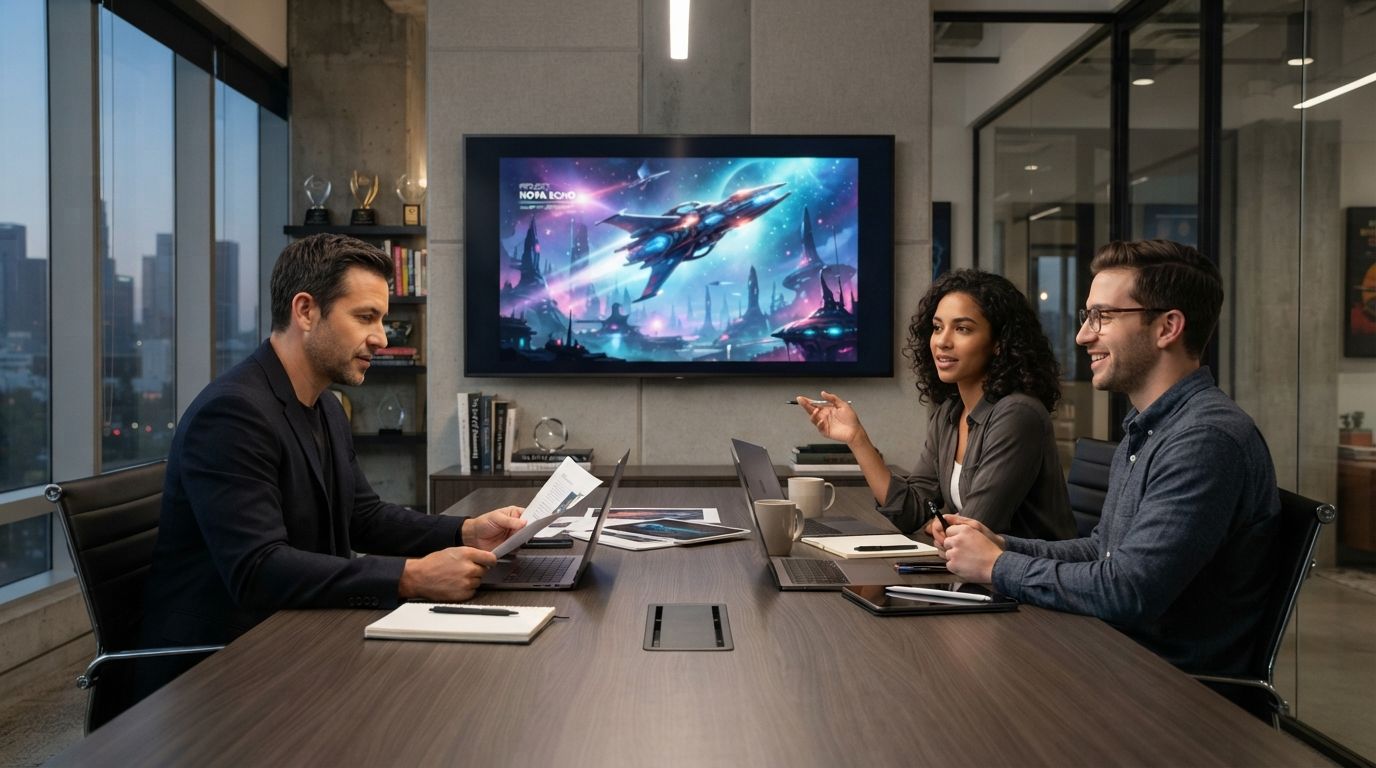
Introduction: The Golden Age of Sci-Fi Animation
The global animation industry is undergoing a massive paradigm shift. Driven by the explosive growth of streaming platforms, globalized audiences, and evolving viewer demographics, animation is no longer viewed solely as a medium for children’s entertainment. Today, adult animation and high-concept genre storytelling are experiencing unprecedented demand. Sci-fi, with its boundless visual potential and capacity to explore complex philosophical, technological, and existential themes, has emerged as one of the most lucrative and critically acclaimed genres in modern animation. From the mind-bending anthology of Love, Death & Robots and the cosmic, emotional depth of Scavengers Reign, to the high-octane cyberpunk aesthetics of Cyberpunk: Edgerunners and the prestige narrative of Pantheon, audiences are hungry for sophisticated science fiction.
For screenwriters, novelists, comic creators, and world-builders, this shift represents an extraordinary opportunity. However, breaking into the animation industry requires more than just a brilliant concept; it demands a deep understanding of the specialized development pipelines, legal landscapes, and pitching dynamics unique to animation. Unlike live-action, where visual effects are often retrofitted to a script, animation integrates the visual and narrative processes from day one. If you want to know How to Sell Sci-Fi Stories to Animation Studios, you must learn to think like both a storyteller and an animation producer. This comprehensive guide will dissect the entire pipeline, from identifying the right studios and crafting an industry-standard pitch bible, to navigating legal protections and securing a lucrative development deal.
Understanding the Animation Market and Target Demographics
Before you write a single page of your pitch, you must understand where your story fits within the current animation ecosystem. Animation is highly segmented by demographic, budget, and distribution platform. Pitching a dark, dystopian biopunk story to a studio that specializes in preschool edutainment is a waste of time for both parties. To successfully target your pitch, you must categorize your story and match it to the correct segment of the market.
Adult Sci-Fi vs. All-Ages and Family Sci-Fi
The first step in positioning your story is defining its target demographic. The animation market is broadly divided into three sectors:
- Adult Sci-Fi (Ages 18+): This sector thrives on complex narrative structures, mature themes, philosophical questions, and often, graphic violence or intense psychological horror. Examples include Scavengers Reign, Pantheon, Rick and Morty, and Ghost in the Shell. Studios looking for this content prioritize psychological depth, unique artistic visions, and provocative concepts.
- Four-Quadrant / Family Sci-Fi (Ages 8 to 80): These stories appeal to children, teens, and adults simultaneously. They focus on adventure, emotional core relationships, and wonder. Think of Pixar’s Wall-E, Disney’s Big Hero 6, or DreamWorks’ Voltron: Legendary Defender. The emphasis here is on high-concept appeal, merchandising potential, and broad emotional resonance.
- Kids & Tweens Sci-Fi (Ages 6-11): Focused on action-adventure, comedic sci-fi, or toy-etic concepts. Shows like Ben 10 or Transformers: EarthSpark fit this category. If your story relies heavily on complex scientific exposition or dark existential dread, it does not belong here.
Independent Animation Studios vs. Major Streamers and Networks
To understand How to Sell Sci-Fi Stories to Animation Studios, you must recognize the distinction between production studios and distribution networks/streamers. Production studios (such as Titmouse, Powerhouse Animation, Fortiche Production, or Studio Yotta) are the entities that actually make the animation. Streamers and networks (such as Netflix, Apple TV+, Adult Swim, Disney+, and Amazon Prime) are the buyers who finance and distribute the content.
Often, the most effective path to selling a story is partnering with an established animation production studio first. These studios are constantly looking for high-quality intellectual property (IP) to option. Once a studio options your story, they will work with you to develop the visual assets and use their industry relationships to pitch the project directly to major streamers for financing. Alternatively, if you have an established track record or strong representation, you can pitch directly to the development executives at the networks and streaming platforms.
Developing a High-Impact Pitch Bible for Sci-Fi Animation
The “Pitch Bible” (sometimes called a Show Bible or Pitch Deck) is the single most important document you will create. In animation, a script alone is rarely enough to sell a show. Because animation is a highly visual medium, executives need to see the world, the characters, and the tone on the page. A professional pitch bible must be visually striking, highly structured, and concise.
The Logline: Crafting a Hook That Demands Attention
Your logline is the elevator pitch for your series. It must convey the protagonist, the inciting incident, the primary conflict, the unique sci-fi premise (the “novum”), and the stakes in one or two sentences. A great sci-fi logline highlights how the speculative technology or alien setting drives the human conflict.
Example of a weak logline: “In the future, a detective investigates cybernetic crimes in a neon city.” (Too generic, lacks specific stakes and unique identity).
Example of a strong sci-fi logline: “When a disgraced neuro-detective is forced to upload her consciousness into the synthetic body of her prime suspect, she must solve her own murder before the suspect’s digital virus erases her mind forever.” (Clear protagonist, high stakes, unique sci-fi hook, and clear narrative engine).
World-Building and the “Rules of the Universe”
Science fiction lives and dies by its world-building. However, many writers make the mistake of infodumping pages of lore. Animation executives do not want a history book; they want to understand the active, living environment where your characters interact. Focus on defining the “Rules of the Universe.” If artificial intelligence is ubiquitous, what are its limits? If faster-than-light travel exists, what is the economic or physical cost? Establishing these boundaries creates tension and helps animators understand the visual constraints of the world.
Character Arcs and Visual Designs
Characters are the emotional anchor of your story. In your pitch bible, devote a page to each of your primary characters. Each profile should include:
- The Core Conflict: What does the character want (external goal) versus what do they need (internal growth)?
- The Sci-Fi Integration: How does the sci-fi element affect them? Are they cybernetically enhanced? Are they a clone dealing with identity issues? Are they an alien trying to assimilate?
- Visual Concept: Even if you are not an artist, you must describe their visual identity. Use evocative language to describe their silhouette, color palette, and key physical traits. If possible, hire a professional concept artist to create character turnarounds and expression sheets. Having professional character designs increases your chances of selling the project by orders of magnitude.
Episode Springboards and Multi-Season Narrative Arcs
Executives need to know that your concept has “legs”—meaning it can sustain multiple seasons and dozens of episodes. To prove this, your pitch bible must include a detailed overview of the first season’s narrative arc, followed by 3 to 5 “episode springboards.” An episode springboard is a short paragraph detailing the setup, conflict, and resolution of a standalone episode. It demonstrates how your sci-fi world generates endless story engines.
Why Your Sci-Fi Story Must Be Animated
One of the first questions an animation executive or executive producer will ask you is: “Why does this need to be animated? Why can’t we do this in live-action?” If your story could easily be shot with live actors in a contemporary city, it does not belong in animation. You must justify the medium.
Leveraging the Unlimited Visual Canvas of Animation
Animation allows for visual abstraction, surrealism, and scale that would cost hundreds of millions of dollars to replicate in live-action. In animation, a massive space battle, an organic alien ecosystem, or a character shifting shape through dimensions costs the same to produce as two people talking in a coffee shop. When learning How to Sell Sci-Fi Stories to Animation Studios, emphasize the visual metaphors that only animation can achieve. For instance, in *Scavengers Reign*, the alien biology is so intricate and bizarre that live-action CGI would struggle to make it feel organic and tangible; the 2D-inspired, Moebius-esque animation style makes the world feel cohesive and alive.
Understanding 2D, 3D, and Hybrid Animation Pipelines
As the creator, you should have a clear vision of the aesthetic style of your show, as this directly impacts the budget and target studios. Familiarize yourself with the primary animation pipelines:
- 2D Animation (Traditional/Vector): Often used for character-driven stories, comedy, or highly stylized artistic visions (e.g., *Pantheon*, *Primal*). It offers immense artistic freedom but can be labor-intensive for complex action.
- 3D CGI Animation: The industry standard for feature films and high-end action series (e.g., *Love, Death & Robots* episodes, *Star Wars: The Bad Batch*). It allows for dynamic camera movement, realistic lighting, and complex mechanical designs.
- Hybrid/Cel-Shaded Animation: Blending 3D models with 2D aesthetics (e.g., *Arcane*, *Spider-Man: Into the Spider-Verse*). This is currently the most sought-after aesthetic in the industry, offering the cinematic scale of 3D with the expressive artistry of 2D.
Budgetary Realities and Scope Management
While animation offers an unlimited visual canvas, it is not free. Every new asset—whether it is a new character model, a new environment, or a complex vehicle—must be designed, modeled, rigged, and textured. If your sci-fi story features a new alien planet in every single episode, the asset budget will skyrocket. Demonstrating that you understand “asset reuse” (e.g., setting multiple episodes on a central space station hub while exploring different sectors) shows producers that you are a pragmatic partner who respects the financial realities of animation production.
Protecting Your Intellectual Property and Finding Representation
The entertainment industry runs on intellectual property, and protecting your original sci-fi concepts is paramount. Before you begin sending your pitch bible to studios, you must establish a secure legal foundation.
Copyright, WGA Registration, and NDAs
Under international copyright law, your original written work is protected the moment you write it down. However, registering your pitch bible and pilot script with the US Copyright Office or the Writers Guild of America (WGA) registry provides crucial, legally admissible evidence of your ownership and the date of creation.
A common misconception is that you should demand animation studios sign a Non-Disclosure Agreement (NDA) before you pitch to them. In reality, major animation studios, networks, and production companies will almost never sign an NDA to receive a pitch. They receive thousands of pitches a year, and the risk of accidental litigation over similar concepts is too high. Instead, they will often require you to sign a Submission Release Form. This form protects the studio by stating that they may already have similar concepts in development. To protect yourself, ensure your work is thoroughly documented and registered before signing any release forms.
Securing Literary Managers, Agents, and Entertainment Attorneys
Most major animation studios and networks have a strict policy against accepting “unsolicited submissions.” This means they will delete or return any pitch sent directly by an unrepresented creator to avoid legal liabilities. To get your pitch in front of decision-makers, you need a gatekeeper to submit it on your behalf. This is where literary managers, agents, and entertainment attorneys come in.
- Literary Managers: Focus on career development, refining your pitch materials, and helping you package your project. They are often more accessible to emerging writers and will work closely with you to polish your sci-fi bible.
- Agents (WGA-aligned): Focus strictly on finding booking opportunities, setting up pitch meetings, and negotiating deals. They operate on a commission basis (typically 10%).
- Entertainment Attorneys: Can sometimes submit your work to studios if they have established relationships. More importantly, they are essential for reviewing and negotiating contract terms once a studio expresses interest.
How to Sell Sci-Fi Stories to Animation Studios: The Pitch Process
Once your pitch bible is polished, your IP is registered, and you have identified potential partners, it is time to execute your pitching strategy. Selling a show is a game of relationships, persistence, and performance.
Writing a Compelling Query Letter
If you do not have an agent or manager, your first step is to query managers or independent producers who accept unsolicited queries. A query letter is a short, professional email designed to generate interest in your project. It must be highly structured:
- The Hook: Address the recipient by name, reference a project they have produced that aligns with your work, and state why you are reaching out.
- The Pitch: Provide the title, format (e.g., 8-episode limited animated series), demographic, and your killer logline. Follow this with a brief, high-energy paragraph explaining the unique world and thematic core of the story.
- Your Bio: Keep it relevant. Mention any writing awards, published works, or your background in science/technology that lends authority to your sci-fi world.
- The Call to Action (CTA): Ask if they would be willing to read your pitch bible or pilot script. Never attach large files to an initial cold email; always ask for permission to send them first.
Navigating Industry Festivals and Markets
One of the absolute best ways to sell your sci-fi story is to attend animation-specific festivals and markets. These events bring creators, producers, and network executives together in one place with the explicit purpose of buying and selling content. Key markets include:
- Annecy International Animation Film Festival & MIFA (France): The world’s premier animation festival and market. It is the ultimate hub for adult and independent animation.
- Kidscreen Summit (USA): The leading event for the children’s entertainment industry, ideal for four-quadrant and family sci-fi pitches.
- MIPCOM / MIPTV (Cannes): Massive global content markets where international co-productions are financed and distributed.
- Ottawa International Animation Festival (OIAF) (Canada): A highly respected festival with strong industry networking components, particularly for indie and artistic creators.
Mastering the Pitch Meeting: From Hook to Q&A
If a studio or executive likes your query or meets you at a market, they will invite you to a formal pitch meeting (either in-person or via video conference). A standard pitch meeting lasts 20 to 30 minutes and follows a precise rhythm:
- The Warm-Up (2-3 minutes): Casual banter. Build a human connection with the executives.
- The Personal Connection (2 minutes): Explain *why* you had to write this story. What is your personal connection to this sci-fi premise? Why does it matter to you?
- The World and Hook (5 minutes): Pitch the logline and paint a vivid picture of the world. Use visual metaphors. Let them feel the atmosphere of your sci-fi universe.
- The Characters (5 minutes): Introduce your protagonist, antagonist, and key relationships. Focus on their emotional journeys, not just their powers or gear.
- The Pilot and Season Arc (5 minutes): Walk them through the pilot episode’s major beats, and briefly summarize where the first season goes. Finish with a vision of future seasons.
- The Q&A (10 minutes): The executives will ask questions. They will test your knowledge of your own world, ask about budget management, target demographics, and potential visual styles. Answer confidently, and view their questions as a collaborative brainstorming session.
The Economics of Animation Development Deals
If an animation studio or network falls in love with your pitch, they will make an offer. It is critical to understand that you are rarely selling the show outright at this stage. Instead, you are entering into a development or option agreement.
The table below outlines the primary types of agreements you will encounter, their typical financial structures, and the key clauses you must watch out for:
| Agreement Type | Typical Financial Terms | Pros | Cons / Key Clauses to Watch |
|---|---|---|---|
| Option Agreement | $1,000 – $10,000 upfront for an exclusive option period (usually 12-18 months). | Secures upfront cash; the studio is financially motivated to set up the show. | Ensure you have a Reversion Clause. If the studio fails to produce or finance the show within the option period, all rights must return to you. |
| Shopping Agreement | $0 upfront. The creator grants the studio the exclusive right to “shop” the project to networks. | Low barrier to entry; allows you to attach a reputable studio to your pitch for free. | No guaranteed money; if the studio loses interest, your project can get stuck in limbo. Keep the shopping window short (6-9 months). |
| Development Deal | $20,000 – $100,000+ to write a pilot script, bible, and fund visual development. | Fully funded; you get paid to write and collaborate with professional artists. | The network/studio will demand significant creative control and ownership of the IP. Ensure you negotiate your credit and backend points. |
| Co-Production Agreement | Varies. Multiple studios pool resources and tax credits to finance the series. | Highly common in international animation; spreads financial risk and opens global markets. | Extremely complex legal structures. Creative decisions can become bogged down by committee approval across different countries. |
Key Takeaways for Aspiring Sci-Fi Animation Creators
- Define Your Demographic Early: Tailor your sci-fi story specifically for Adult, Family/Four-Quadrant, or Kids’ animation. Your target demographic dictates your choice of animation studios and visual styles.
- Visuals are Non-Negotiable: A script is not enough. To sell sci-fi to animation studios, you must package your concept with a stunning pitch bible containing character designs, world aesthetics, and clear episode springboards.
- Justify the Medium: Be prepared to answer why your story *must* be animated rather than shot in live-action. Lean into the unlimited visual scale, surrealism, and metaphorical power of animation.
- Build a Gatekeeper Network: Do not send unsolicited pitches. Protect your work via copyright registration, and focus on securing a literary manager, agent, or entertainment attorney to make professional submissions.
- Understand the Deal Structures: Never sign away your rights permanently without a clear path to production. Prioritize reversion clauses in your option agreements, and ensure you retain credit and fair compensation.
Frequently Asked Questions
Do I need to be an artist to sell a sci-fi story to an animation studio?
No, you do not need to be an artist. Many successful animation creators are purely writers. However, because animation is an inherently visual medium, you cannot pitch a wall of text. If you are not an artist, you should collaborate with a professional concept artist or character designer to create key visual assets for your pitch bible. Alternatively, write highly evocative descriptions and build a “mood board” using existing imagery to clearly communicate your desired aesthetic direction, making sure to credit the original sources.
How much do animation studios pay for an original sci-fi concept?
The financial return varies wildly depending on your experience, the studio’s size, and the type of agreement. An initial option fee can range from $1,000 to $10,000. If the show is greenlit for production, you will typically receive a purchase price for the IP, a per-episode script fee (ranging from $5,000 to $20,000+ per episode under WGA guidelines), and a “Created By” fee, alongside a percentage of backend profits and merchandising royalties.
Can I pitch a sci-fi story that is already self-published as a novel or comic book?
Yes, absolutely. In fact, having a self-published novel, comic book, or webtoon is a massive advantage. The entertainment industry is highly risk-averse, and studios love “proven IP.” If you can show that your sci-fi story already has an active, engaged fanbase—even a modest one—it significantly reduces the perceived risk for the studio and makes your project far more attractive to buyers.
How long should a pitch bible be for an animated sci-fi series?
A professional pitch bible should be concise and highly curated, typically between 10 to 15 pages. Executives read hundreds of pitches; they will lose interest if your deck is a 50-page lore document. Focus on high-impact visuals, short paragraphs, bullet points, and a clean, thematic layout that reflects the sci-fi tone of your show.
What is the difference between a shopping agreement and an option agreement in animation?
The primary difference is financial commitment and rights ownership. In an option agreement, the studio pays you an upfront fee to lock up the exclusive rights to your project for a set period. In a shopping agreement, no money changes hands; the creator gives the studio the exclusive right to pitch the project to buyers for a limited time. If a buyer is found, the studio and the creator negotiate their respective deals with the buyer simultaneously.
How do I find animation-focused literary managers and agents?
Look for agencies and management companies that explicitly represent writers and creators in the animation space (such as Gotham Group, Kaplan Stahler, or Verve). You can research these agencies through industry databases like IMDbPro. When querying them, keep your email short, professional, and focused on your logline and your project’s target demographic.
Conclusion: Launching Your Sci-Fi Vision
The journey of learning How to Sell Sci-Fi Stories to Animation Studios is a marathon, not a sprint. It is a process that demands a unique blend of creative passion, visual storytelling, and business acumen. The animation landscape is fiercely competitive, but it is also more receptive to bold, innovative, and diverse sci-fi visions than ever before. By building a bulletproof pitch bible, understanding the technical and financial realities of animation production, protecting your intellectual property, and building strong industry relationships, you can transform your speculative concepts into stunning animated realities. The universe you have created deserves to be seen; equip yourself with the professional tools outlined in this guide, and take the first step toward launching your sci-fi vision onto the global screen.


