 English
 Français
 Deutsch
 Español
 Italiano
 Русский
 Português
 العربية
 Türkçe
 Magyar
 Svenska
 Nederlands
 Ελληνικά
 Български
 Polski
 Gaeilge
 Dansk
Dansk Lietuvių kalba
 Suomi
Suomi Hrvatski
 Română
 Latviešu valoda
 Korean
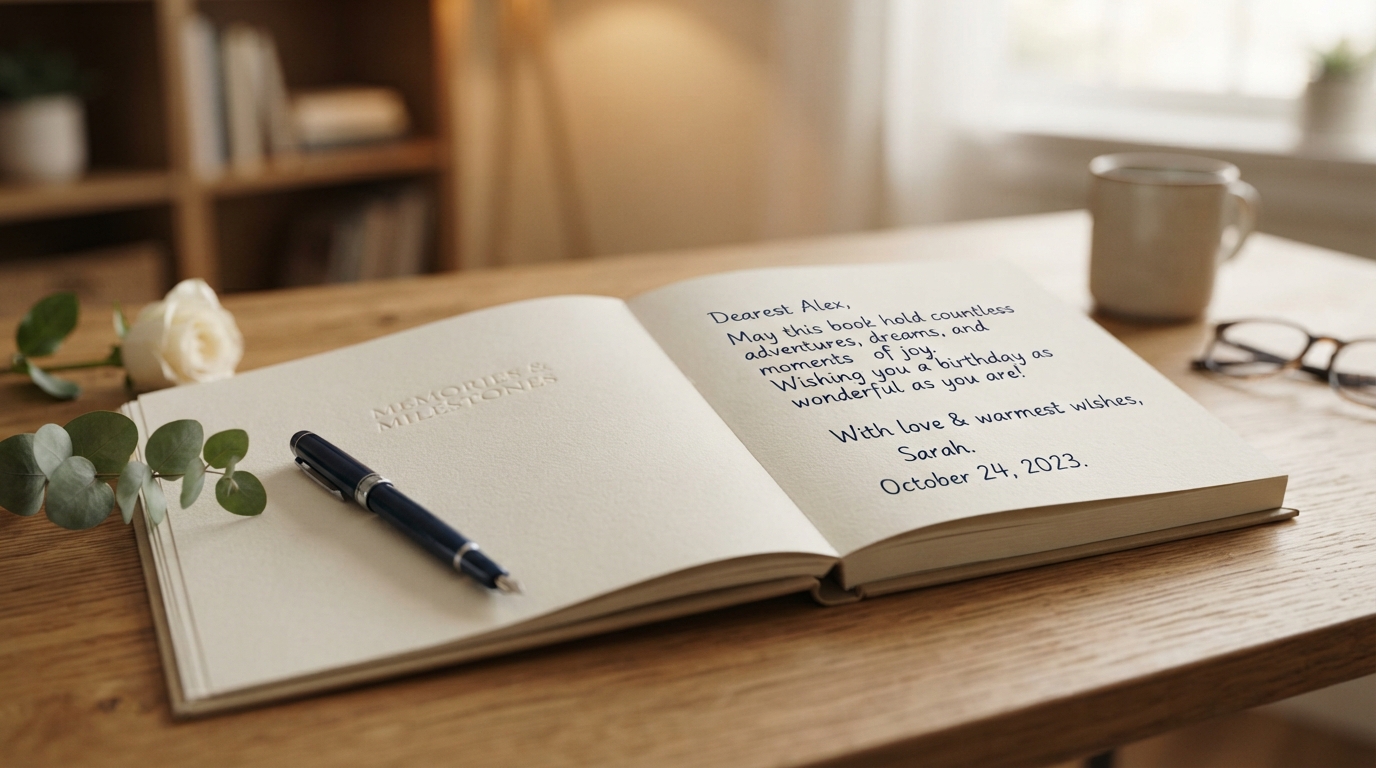
Introduction: The Art of the Literary Dedication
In an increasingly ephemeral digital age, the act of gifting a physical book remains one of the most thoughtful, enduring gestures of human connection. However, a book without a personal inscription is merely a copy off a shelf; with a handwritten note, it transforms into an intimate, historical artifact. When considering what to write in a book for a birthday gift, you are not merely penning a greeting. You are participating in a rich literary tradition that dates back to the early days of print culture, where custom bookplates, marginalia, and hand-inked dedications established a lifetime bond between the giver, the receiver, and the text.
According to recent consumer publishing trends, physical book sales continue to outperform e-books among younger demographics, driven by a desire for tactile experiences and mindfulness. Gifting a book is a subtle nod to the recipient’s intellect, personality, and aspirations. Yet, many gift-givers find themselves frozen when confronted with the blank flyleaf of a brand-new volume. The pressure to write something profound, witty, or emotionally resonant can lead to writer’s block. This comprehensive guide will demystify the process, offering structural frameworks, relationship-specific templates, and professional writing techniques to ensure your birthday book inscription is cherished for decades to come.
The Anatomy of a Perfect Book Inscription
To craft a memorable inscription, it helps to understand the architectural components of a successful written dedication. Much like a short story or a professional essay, a book inscription benefits from a clear structure. This ensures your message is balanced, purposeful, and avoids the common pitfall of rambling or running out of physical space on the page.
Every outstanding book dedication should ideally incorporate the following four key structural elements:
- The Salutation: Establish the tone immediately. For casual or professional relationships, a simple “Dear [Name],” suffices. For closer bonds, use nicknames, terms of endearment, or shared identifiers (e.g., “To my favorite co-conspirator,”).
- The Connection (The “Why”): This is the core of the inscription. Explain why you chose this specific book for them. Is it a novel that changed your worldview? A biography of a historical figure they admire? A collection of poetry that matches their current season of life? Connecting the book’s themes to the recipient’s personality creates an immediate emotional bridge.
- The Birthday Aspiration: Offer a forward-looking wish that aligns with the book’s spirit. If gifting a travel memoir, wish them a year of bold exploration. If gifting a philosophical work, wish them peace, clarity, and deep reflection in the year ahead.
- The Sign-off, Location, and Date: Never omit the date and your location. Decades from now, when the recipient or their descendants reopen the book, the date (e.g., “October 14, 2024”) and location (e.g., “Seattle, WA”) will serve as a historical anchor, instantly transporting them back to that specific moment in their life story.
Tailoring the Message by Relationship
The depth and tone of your inscription must align with your relationship with the recipient. A message that is too formal for a best friend can feel cold, while an overly intimate message for a professional colleague can cause discomfort. Here is how to navigate different relational dynamics when deciding what to write in a book for a birthday gift.
1. For Close Friends and Intellectual Companions
Friendships are built on shared histories, inside jokes, and mutual understanding. When writing to a close friend, your inscription should celebrate these shared experiences. Focus on the intellectual or emotional journey you have shared, and how the book acts as a continuation of those late-night conversations.
Example Concept: If you are gifting a classic piece of fiction that you both have discussed, reference a specific character or theme that mirrors your friendship. Keep the tone warm, authentic, and slightly conversational.
2. For Romantic Partners and Spouses
A book gifted to a romantic partner is an opportunity to express vulnerability, deep affection, and shared dreams. The inscription should highlight how their presence enriches your life. Books on poetry, classic love stories, or beautifully illustrated art books are perfect canvases for these deeply personal sentiments.
Example Concept: Focus on the concept of “chapters” in life. Acknowledge the chapters you have written together so far and express your eagerness for the unwritten pages of the future. Use evocative language that speaks directly to your unique bond.
3. For Family Members (Parents, Siblings, and Children)
Family inscriptions should focus on legacy, unconditional support, and the passage of time. When gifting a book to a parent, express gratitude for the stories they read to you in childhood. For siblings, focus on shared roots and growing side-by-side. For children, use the book as a vessel for wisdom, encouragement, and foundational values.
Example Concept: Frame the book as a milestone marker. For a child’s milestone birthday (such as a 10th or 18th birthday), discuss how the lessons within the book can serve as a compass for their journey into the next phase of life.
4. For Professional Colleagues, Mentors, and Mentees
In a professional context, boundaries are essential, but this does not mean your message must be dry or generic. A book gifted to a mentor or colleague should focus on mutual respect, professional growth, and appreciation for their guidance. Non-fiction, business strategy, leadership biographies, or philosophical essays are ideal for these relationships.
Example Concept: Clearly articulate the impact their guidance has had on your professional trajectory. Express your admiration for their leadership style and hope that the book offers fresh perspectives for their ongoing success.
Aligning the Inscription with Book Genres
An advanced technique in crafting the perfect dedication is to align your writing style with the genre of the book itself. This creates a cohesive reading experience from the very first page.
Fiction and Literary Classics
When gifting fiction, your inscription should touch upon the power of storytelling, imagination, and empathy. Fiction allows us to step into another person’s shoes; your message should invite the recipient to lose themselves in the narrative world.
Linguistic Tip: Use words like “escape,” “journey,” “adventure,” “perspective,” and “resonance.” Suggest that they find a quiet corner, pour their favorite beverage, and let the story unfold.
Non-Fiction, Biographies, and History
Non-fiction books are intellectual tools designed to expand our understanding of the world. Your inscription should focus on curiosity, lifelong learning, and the pursuit of truth.
Linguistic Tip: Use words like “insight,” “wisdom,” “inspiration,” “exploration,” and “knowledge.” Frame the book as an intellectual exploration of a topic you know they are passionate about.
Self-Help, Wellness, and Poetry
These genres are deeply personal and are often gifted during times of transition, reflection, or healing. Your inscription should be gentle, supportive, and mindful. Avoid sounding prescriptive; instead, offer the book as a companion for their personal journey.
Linguistic Tip: Use words like “peace,” “reflection,” “growth,” “solace,” “mindfulness,” and “gentleness.” Emphasize that the book is a gift of time and self-care.
Strategic Guide to Book Inscriptions (Table)
The following table provides a quick-reference matrix to help you align your relationship, the book’s genre, the ideal tone, and key thematic elements for your inscription:
| Relationship Type | Recommended Genre | Ideal Tone | Core Narrative Theme |
|---|---|---|---|
| Best Friend | Contemporary Fiction / Humorous Essays | Warm, Witty, Conversational | Shared adventures, inside jokes, mutual growth |
| Romantic Partner | Poetry / Classic Literature / Art Books | Intimate, Passionate, Reflective | Shared future, deep appreciation, love’s journey |
| Parent / Grandparent | Historical Biography / Memoirs | Reverent, Grateful, Nostalgic | Legacy, gratitude for lessons learned, family roots |
| Child / Teenager | Fantasy / Inspirational / Coming-of-Age | Encouraging, Wise, Supportive | Future potential, courage, the joy of discovery |
| Professional Mentor | Leadership / Business Strategy / Philosophy | Respectful, Appreciative, Professional | Intellectual growth, gratitude for mentorship, inspiration |
Concrete Inspiration Templates
If you are still struggling with writer’s block, here are several highly refined, adaptable templates categorized by tone. You can customize these to fit the specific details of your gift.
The Inspirational & Forward-Looking Tone
“Dear [Name], Happy Birthday! As you step into this next year of life, I wanted to gift you a book that has profoundly shaped my own perspective on [Topic/Life]. May the pages within inspire you to dream boldly, embrace new challenges, and recognize the incredible strength you carry within yourself. I am so excited to watch you write the next chapter of your beautiful journey. With all my admiration, [Your Name] — [Date]”
The Short, Sweet, & Elegant Tone
“To [Name], wishing you the happiest of birthdays! May this book bring you hours of quiet joy, inspiration, and escape. Here’s to another wonderful year of life, laughter, and great reading. Warmest wishes, [Your Name] — [Date]”
The Nostalgic & Sentimental Tone
“Dearest [Name], Happy Birthday! Whenever I think of our friendship, I think of our long discussions about [Topic/Shared Interest]. This book immediately made me think of you and the many beautiful memories we’ve built over the years. Thank you for being such a constant source of light in my life. I hope you enjoy this story as much as I have enjoyed ours. With love always, [Your Name] — [Date]”
The Humorous & Playful Tone
“To [Name], Happy Birthday! I bought you this book because I know your personal library is looking dangerously organized, and I wanted to help you expand your stack of unread literature. In all seriousness, I think you’ll love the wit and wisdom in these pages (almost as much as you love my excellent taste in gifts). Enjoy the read! Cheers, [Your Name] — [Date]”
The Etiquette and Mechanics of Writing in a Book
Crafting the perfect message is only half the battle; the physical execution of writing the inscription requires care, precision, and proper materials. To ensure your dedication remains legible and does not damage the book over time, consider the following technical guidelines:
Choosing the Right Writing Instrument
Never use a standard, cheap ballpoint pen or a heavy permanent marker. Ballpoint pens can leave deep, unsightly indentations on the paper, while heavy markers will bleed through the page, ruining the text on the reverse side. Instead, opt for a high-quality, acid-free archival pen or a fine-liner gel pen. Archival ink is designed to resist fading and chemical degradation over decades, ensuring your handwriting remains crisp and dark for generations.
Determining Where to Write
Where should you physically place your message? Traditional book etiquette suggests writing on the blank flyleaf (the very first blank page when you open the cover) or the half-title page (the page containing only the book’s title). Writing on the main title page is generally reserved for the author’s signature. Ensure your writing is straight and well-spaced. If you are worried about writing crookedly, lightly place a lined piece of paper underneath the flyleaf page as a guide, or practice your message on a scrap piece of paper beforehand to gauge the space required.
The Case of Rare, Vintage, or First-Edition Books
If you are gifting a highly valuable, rare, or first-edition book, physical inscriptions can sometimes decrease the book’s monetary value to collectors. In these rare instances, the best practice is to write your message on a beautiful, custom-designed bookplate (ex-libris sticker) that can be affixed to the inside front cover, or to write a detailed letter on high-quality stationery and lay it loosely inside the book. This preserves both the sentimental value of your message and the physical integrity of a rare collectible.
Frequently Asked Questions
Should I write my birthday message on the title page or the flyleaf?
It is best to write your message on the blank flyleaf or the half-title page. The main title page is traditionally reserved for the author’s signature, should the recipient ever have the opportunity to get the book signed in person.
Is it considered bad etiquette to write inside a book?
No, writing a thoughtful, personal inscription inside a gifted book is a time-honored tradition that enhances its sentimental value. The only exception is for rare, antique, or highly valuable first editions, where loose letters or custom bookplates are preferred to maintain the book’s market value.
What should I do if I make a spelling mistake while writing the inscription?
Do not use correction fluid or cross out the mistake aggressively, as this can ruin the aesthetic of the page. If you make a minor error, gently draw a single, clean line through the incorrect word and continue, or write your message on a beautiful bookplate and neatly paste it over the mistake.
How long should a book inscription be?
A great book inscription is typically between three to six sentences long. It should be concise enough to fit comfortably on a single page without crowding, yet detailed enough to convey genuine emotion, the reason for the gift, and a birthday wish.
Can I use a famous quote instead of writing my own words?
Yes, starting your inscription with a meaningful quote from literature, philosophy, or the book’s author is an excellent strategy. However, always follow the quote with a brief, personal note explaining why you chose it and your warm wishes for their birthday.
Conclusion: The Lasting Power of the Written Word
In a world dominated by instant messages and temporary digital notifications, a handwritten book inscription stands as a monument to a relationship. It is a physical manifestation of thought, time, and care. When you take the time to consider what to write in a book for a birthday gift, you are giving more than just literature; you are giving a piece of yourself, captured in ink, to be rediscovered every time the cover is opened.
Whether you choose a message that is deeply emotional, intellectually stimulating, or lightheartedly humorous, the key is authenticity. Let the themes of the book guide your hand, respect the physical medium, and write with the future in mind. Decades from now, that book will sit on a shelf, carrying your voice, your wishes, and your bond across the boundaries of time.


